Lights, camera, action: The Television, Cinema and Podcasting Lab
By Ian Flink | Staff writer
Through the door next to the eastern entrance of University Hall, there is an incredible resource for students of the Pamplin College of Arts, Humanities and Social Sciences in the form of the Television, Cinema and Podcasting Lab.
Within the TVC&P Lab, there is a wide variety of video and photography equipment available to students to borrow and use for their class projects.
Jasmine Garcia manages the lab, its equipment, podcasting and editing rooms, as well as equipment rentals.
The lab and equipment rentals are only open to students of the Pamplin College of Arts, but this ensures that there are still enough cameras, lights, tripods, and other equipment to go around.
To rent the gear, you must be enrolled in a production course and only use the cameras for class projects that require their use.
In addition to gear rentals, the TVC lab is also home to many kinds of in-house equipment, which cover pre-production and post-production.
In one of the many suites in the lab space, there is an editing room with two computers that have higher specs than others around campus, making post-production much easier and faster on those computers.
The editing suite is also home to microphone setups and switchers, but they are only available for reservation and use within the lab rather than for borrowing and use outside of the lab.
Along with gear, there are also many classes taught in the lab space by professor Matthew Buzzell in Art & Design and an array of professors in Communication & Integrated Studies, including Chris Curry, Arthur Takahashi, Ellen Dunn, Thomas Mitchell and Dylan Wilson.
One of the courses taught in the TVC lab is the Art of Film, which Buzzell describes as a “DVS (Digital and Visual Storytelling) gateway course, which explores all the various areas of film production,” he said.
Another course taught in the TVC lab is Cinematography, a hands-on camera course where students learn all the basic tenets of visual construction for film and all the protocols of camera operation.
Many other production courses are taught there: from Communication, there is TV Production, Audiovisual Media Productions, Digital Editing, Podcasting, Visual Storytelling, Preparing and Producing Visual Media, Advanced Sports Podcasting; in Art & Design, Music Video Production, Experimental Film Production, Short Film Production and film-related capstone project courses.
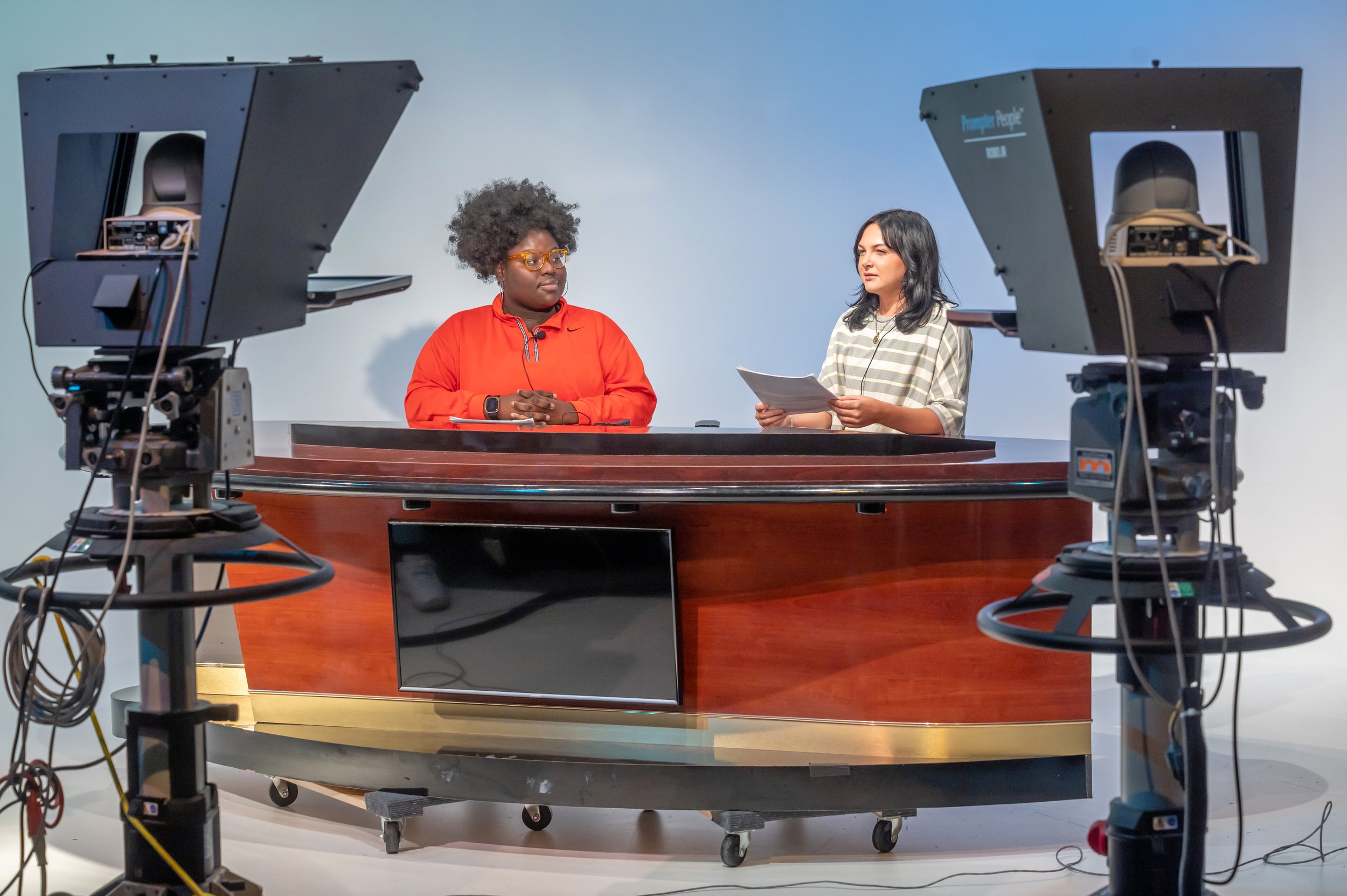
JagNews is produced in the video section of the TVC&P Lab, as are certain visual effects in animation courses.
These courses use different cameras than what can be borrowed from the lab, using Blackmagic 8K cameras, rather than Lumix G35 cameras.
The work that students create throughout these courses is incredible, as hands-on camera operation sparks a unique kind of inspiration that can only be brought to life through filmmaking.
“If I see that a student is really engaged and excited about a film, film history, or a period of film, that is a real joy for me,” Buzzell said. “I love to see that window open when they discover something.”
At the TVC Lab, there are plenty of those windows ready to be opened. All things lighting, audio and camera operation can be found at the TVC&P Lab.
The facility also used to record more than a half dozen podcasts, including The Sports Squad, Chimin’ In, the Game Guild and Page2Page. The Sports Squad is in its ninth year on the air.
According to communication adjunct professor Chris Curry, there are opportunities for podcasting within the TVC&P lab as well.
“One of the assignments for the podcasting class is actually to create their own podcasts, and they can use either studio A or B to create them,” Curry said.
Robert Saunders, an assistant professor of music education, has been doing an ongoing video project with communication senior Clay Waddell.
To students in the Pamplin College of Arts, Humanities and Social Sciences, the TVC&P Lab is the ideal place to let their media production inspiration flourish and create beautiful and impactful works.
Contact Ian Flink at iflink@augusta.edu.
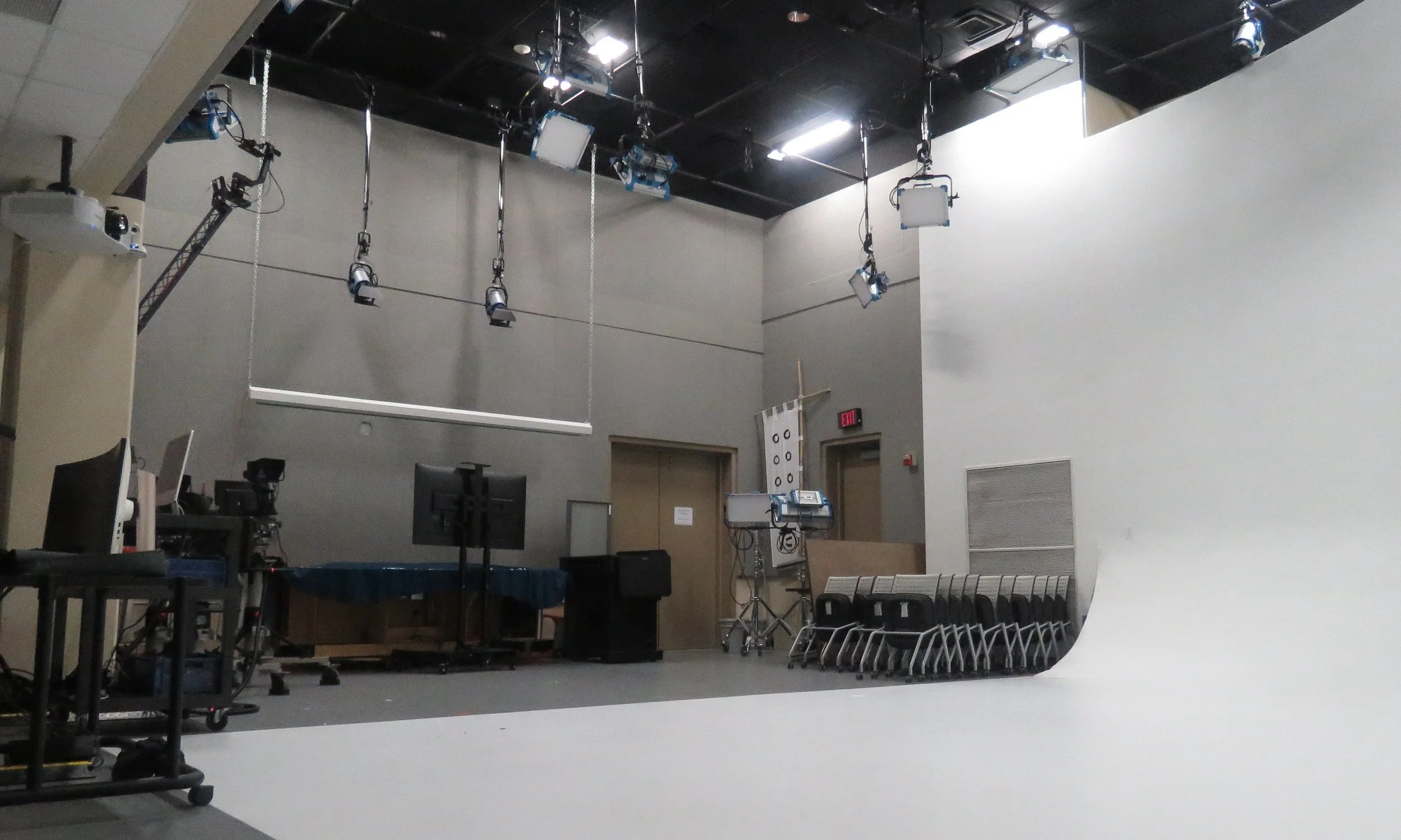
This is the video production area of the TVC&P Lab. Here JagNews is produced and recorded, and special effects are created in animation classes. It is also used to show videos in several courses in both Communication and Art & Design. And it is the home of the Media Production Club. (photo by Ian Flink/the Bell Ringer)