Growing Pains : AU’s Summerville Campus is going through changes
Caelyn Dockal | News editor
For the past generations of Augusta University students, the Summerville Campus has been more than just its classrooms and historic buildings. Its old trees, open green spaces and sidewalks have created a campus where students can walk between classes under a canopy of greenery and gather outside.
Now, that landscape is changing.
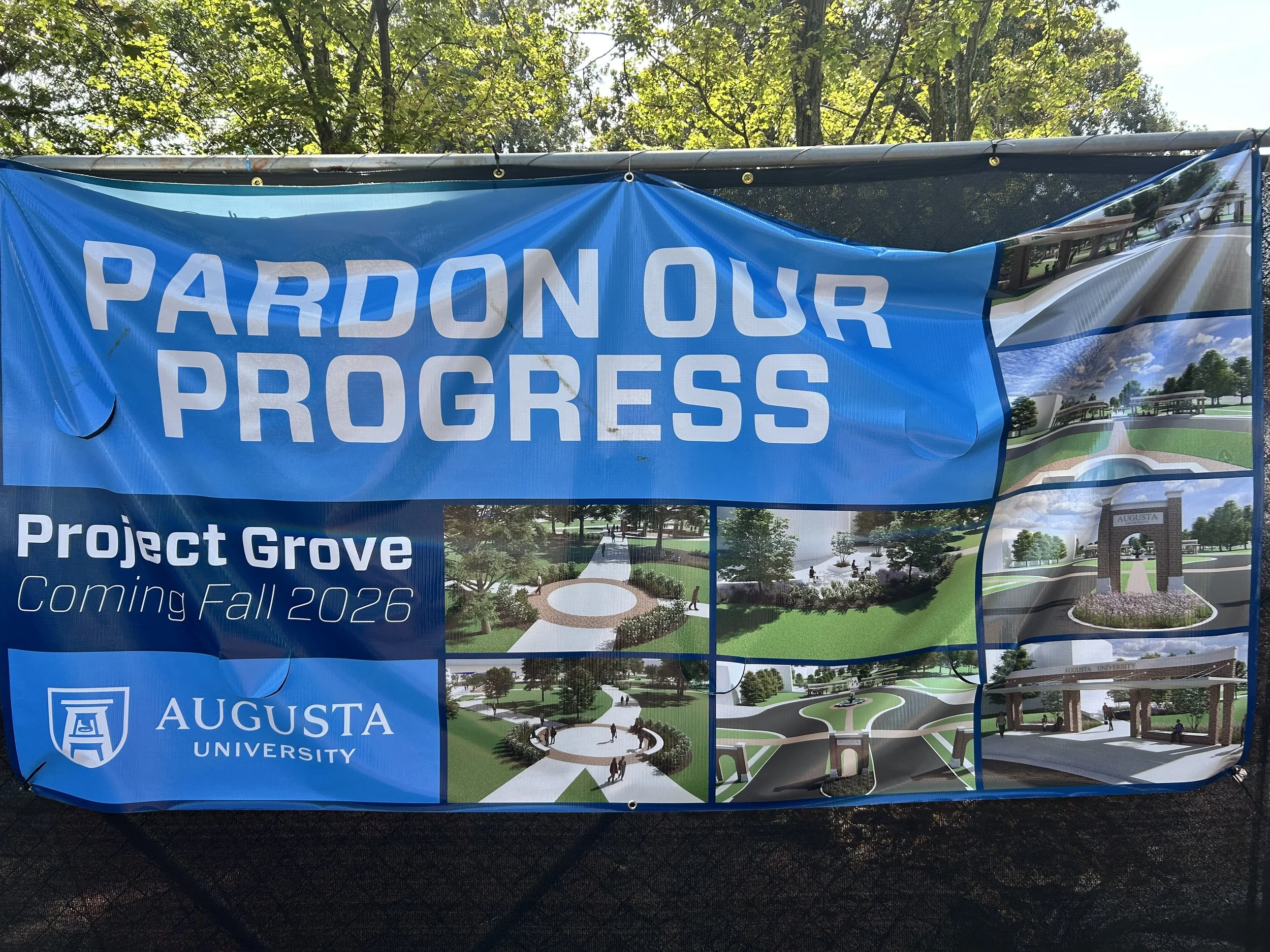
Project Grove renderings from summer 2026. (photo by Caelyn Dockal/the Bell Ringer)
Across the Summerville Campus, construction crews are working on many projects designed to improve pedestrian access, transportation, outdoor gathering spaces and the overall appearance of the campus. The projects began during the summer and are expected to continue in phases through early to mid-2028, according to Augusta University Facilities Services.
The construction is part of a larger effort by AU to update the Summerville Campus while maintaining its historic character and charm. The current and planned projects include widening the sidewalks, new bus stop structures, landscaping improvements, the Teardrop Rotunda, Greek Life Plaza, improvements to the Jaguar Student Activities Center outdoor area, hammock and gathering areas, and enhancements to the Douglas Barnard Amphitheater.
The university says that the projects are intended to make the campus safer, more accessible and more welcoming while giving students additional places to gather, study and participate in campus activities.
One of the most visible changes is happening along the campus sidewalks.
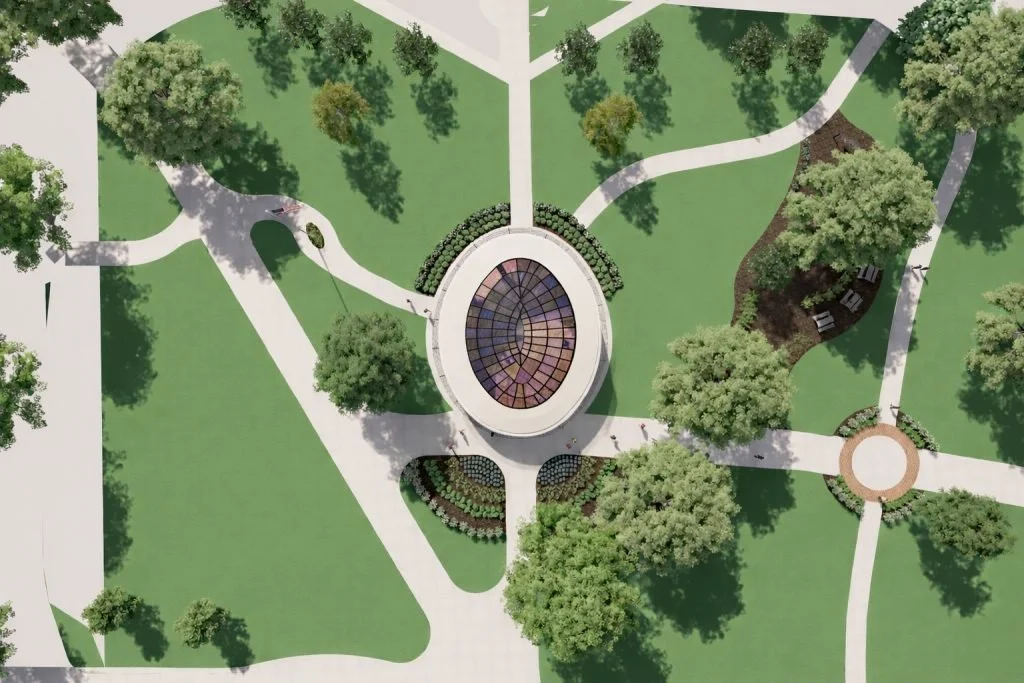
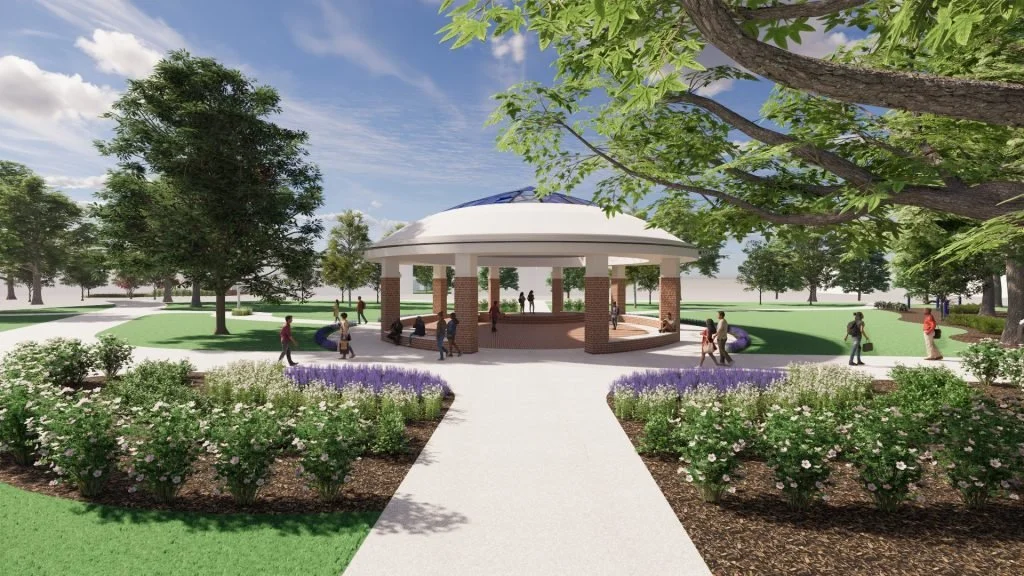
The planned improvements of the Teardrop. (image courtesy of DCM)
The new paths are being widened to accommodate larger groups of students and emergency vehicles, while also creating better connections between different areas of campus. According to AU, an accessibility route was established at the beginning of the semester while construction continued.
For students walking to class, however, the construction has meant adjusting to temporary routes and navigating around closed sidewalks and active work areas.
For Dominic Passmore, a junior from Grovetown, the construction is not necessarily a negative change. Passmore said he likes the improvements, particularly the work being done around the cemetery, which he felt had previously appeared unkempt.
“I personally like it, especially considering the spot I specifically had an issue with was the cemetery, " Passmore said. “It felt like it was so unkempt, and that fits the area. So it doesn't look weird anymore.”
Passmore will spend much of his undergraduate experience on a campus that is still undergoing construction. While he said the work has not significantly disrupted his daily routine so far, he expects the effects could increase and become more noticeable in the spring semester.
“As of right now, it's not an issue because it's just the fall, but I can definitely see it becoming a bigger problem later on,” Passmore said.
Some of the disruption has already affected parking and how students move around campus. Passmore said construction has closed off several parking spaces, forcing him to park farther away than he normally would when going to school.
“That was irritating,” Passmore said. “But other than that, I mean, considering what they are building, I'm pretty happy about it, specifically around the bus stop. That will be a good addition to the campus.”
The construction also comes with the less visible parts of a major campus project: noise, dust, dirt, and temporary disruptions.
Students walking across campus have encountered construction equipment, areas of exposed dirt and changing pedestrian routes. The university’s current projects include a new sprinkler system, sod, outdoor lighting and updated greenery.
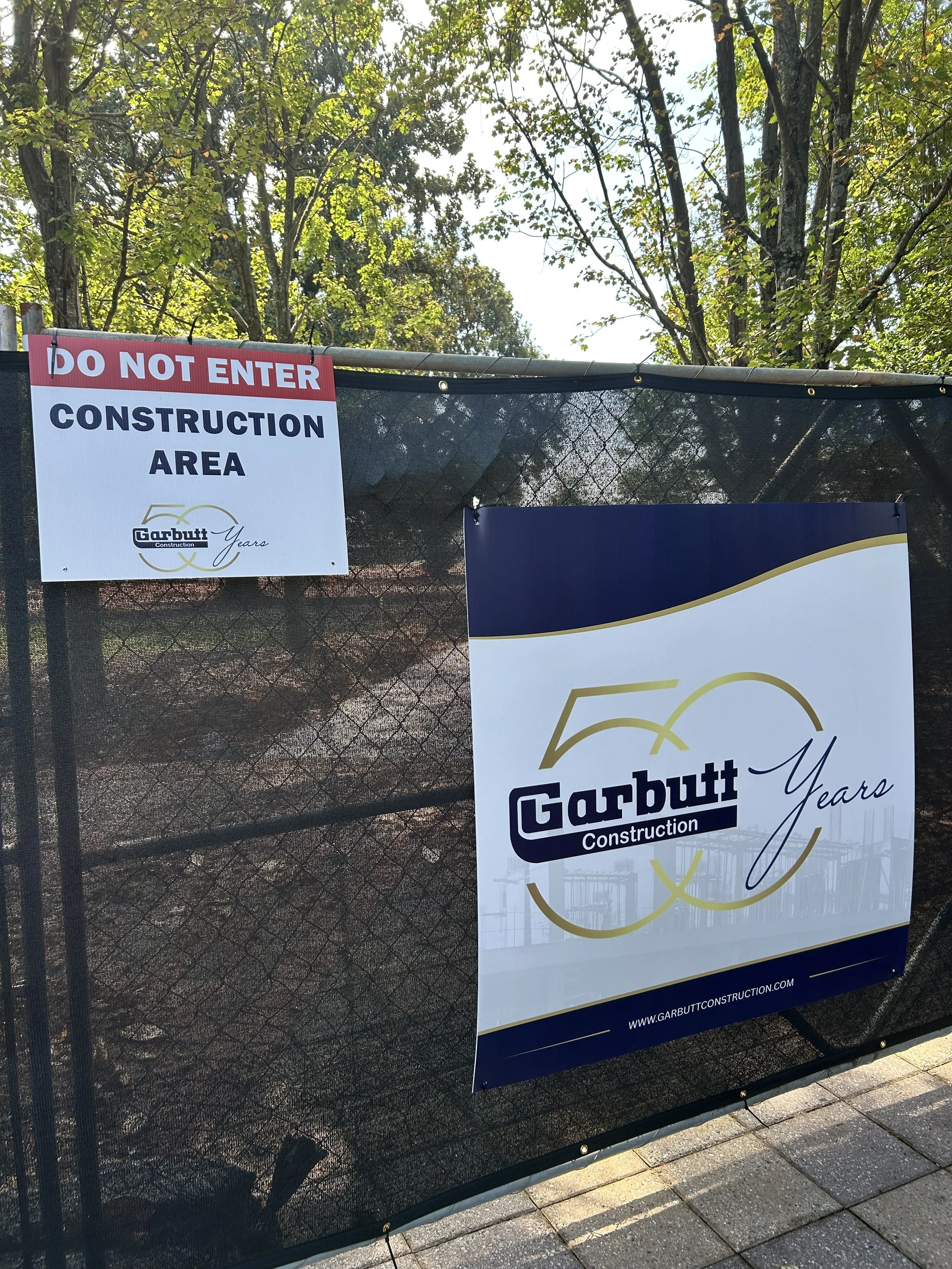
Spaces being blocked off during the summer and fall semesters. (photo by Caelyn Dockal/the Bell Ringer)
Those changes raise a bigger question about the future appearance of Summerville: As AU improves and adds new spaces, how will the university maintain the natural environment that has historically distinguished the campus?
The question is relevant because the trees have been a part of the identity of Summerville. AU describes the campus as being in the shade of “ancient trees,” and the university's campus map identifies Summerville as a historic campus built around former United States arsenal.
The university has also emphasized preservation as part of its approach to campus development. AU’s 2015 Campus Master Plan called for creating 21st-century educational experience while maintaining the beauty and character of campus’ 19th-century roots. The plan also emphasized preservation of the campus history.
Most recently, AU has invested in restoring the campus tree canopy. In February, two cedar trees were planted near the campus entrance after Hurricane Helene destroyed a large portion of the tree's canopy in September of 2024, including a roughly 250-year-old tree that had stood at the entrance.
The effort comes as the university simultaneously adds new landscaping and outdoor spaces throughout Summerville.
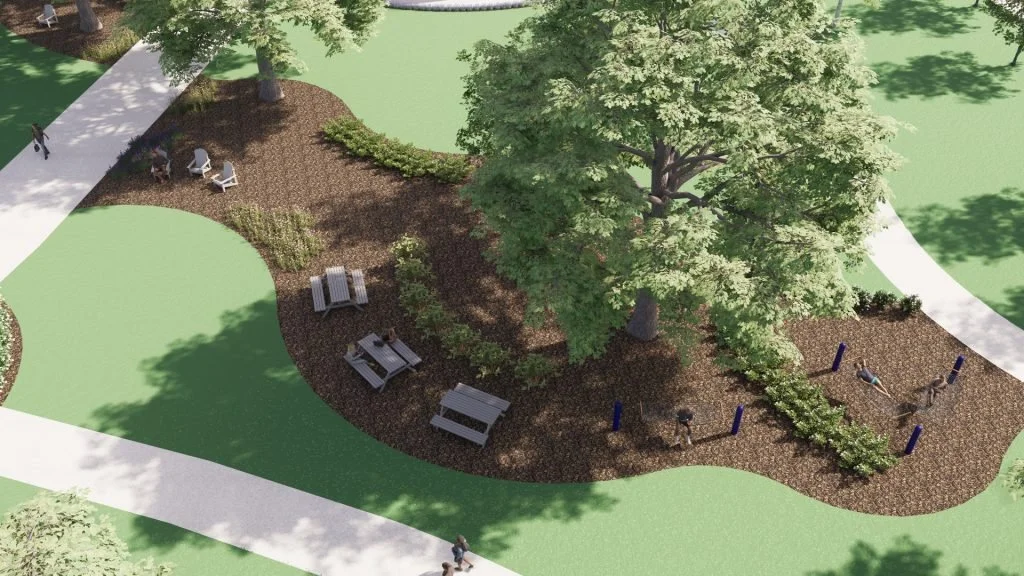
A picnic area will be included in the area bear the Teardrop. (image courtesy of DCM)
The planned outdoor spaces are intended to make the existing landscape more useful for students. The Teardrop Rotunda and Greek LIfe Plaza will provide additional spaces for student organizations to table and hold activities, while expanded JSAC outdoor seating. A shaded hammock area and improvements near the amphitheater are also planned.
On the other hand, Olivia Waddell, junior from Augusta, had a different opinion on the construction process.
“I usually take a shorter and faster route to get to my classes, but now since they have closed off parts [of the sidewalk] I have to go around,” she said “Sometimes I am a little late to class because everyone else is walking the same route as me when class changes happen.
“It is a little frustrating to park now too. I feel like every semester the parking becomes more of an issue where I continue to have to park far to find a spot. This leads to me having to walk though the middle of the campus to go from one side to the other because my car is on opposite sides of where my class is. I'm late because I'm walking through the construction and its a bit frustrating.”
Although Waddell admits it is an issue now, she said that she knows that in the future of the university it will improve.
“I know that this won't be finished till after I graduate, but I am glad that future students will get all these cool things added to make this space better,” she said.
Waddell said that she believes these new changes will cause students to want to stay on campus more.
“This will definitely be for the better for everyone that comes on campus,” she said. “I feel like more people, especially freshman will want to stay on campus more and get more involved in campus life. This was something I had thought about previously that the school needed to do something to incentivise more activities and connections on campus, with AU being in Augusta and not necessarily a ‘college town.’”
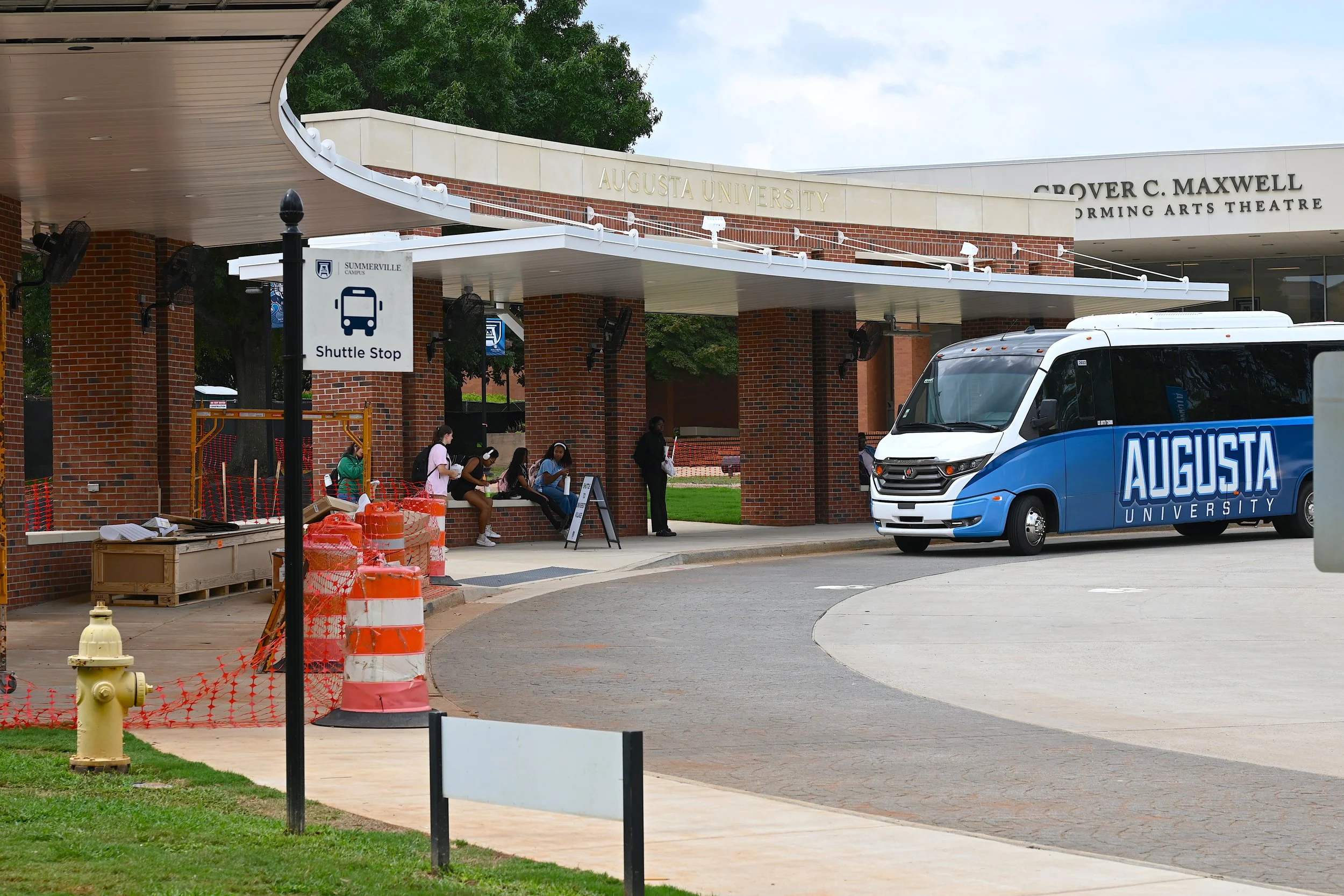
The new bus stop area in front of the Summerville Campus just off Walton Way. (photo by Steve Scwartz/the Bell Ringer)
The first major improvements students will see are the new bus stops and pedestrian areas. AU says the new bus stops are expected to provide shaded waiting areas with heaters and fans, outdoor lighting, digital signage, electrical outlets and emergency call boxes. The bus stop construction is scheduled for completion in September 2026.
While some of the work is expected to be completed soon, the overall transformation will not happen overnight.
Facilities Services estimates that the phased projects will continue through early to mid-2028. The university says construction schedules may change based on factors such as funding, weather and operational needs, and that efforts will be made to minimize disruptions to daily campus operations.
For now, Summerville is a campus caught between its present and its future — with students walking around construction barriers while new sidewalks are laid, gathering spaces are created and landscaping is reshaped around them.
The finished campus is intended to look more connected, accessible and student-centered.
But before students can enjoy those spaces, they have to walk through the construction that is creating them.
Additionally, Allgood Hall’s interior was renovated this summer, although some final touches remain, including much of the interior signage. Next summer, Science Hall will get a similar makeover.
And as AU continues to grow, the transformation of Summerville will ultimately show how the university balances two parts of its identity: Building for the future while preserving the natural and historic character that made the campus what it is.
Contact Caelyn Dockal at cadockal@augusta.edu.