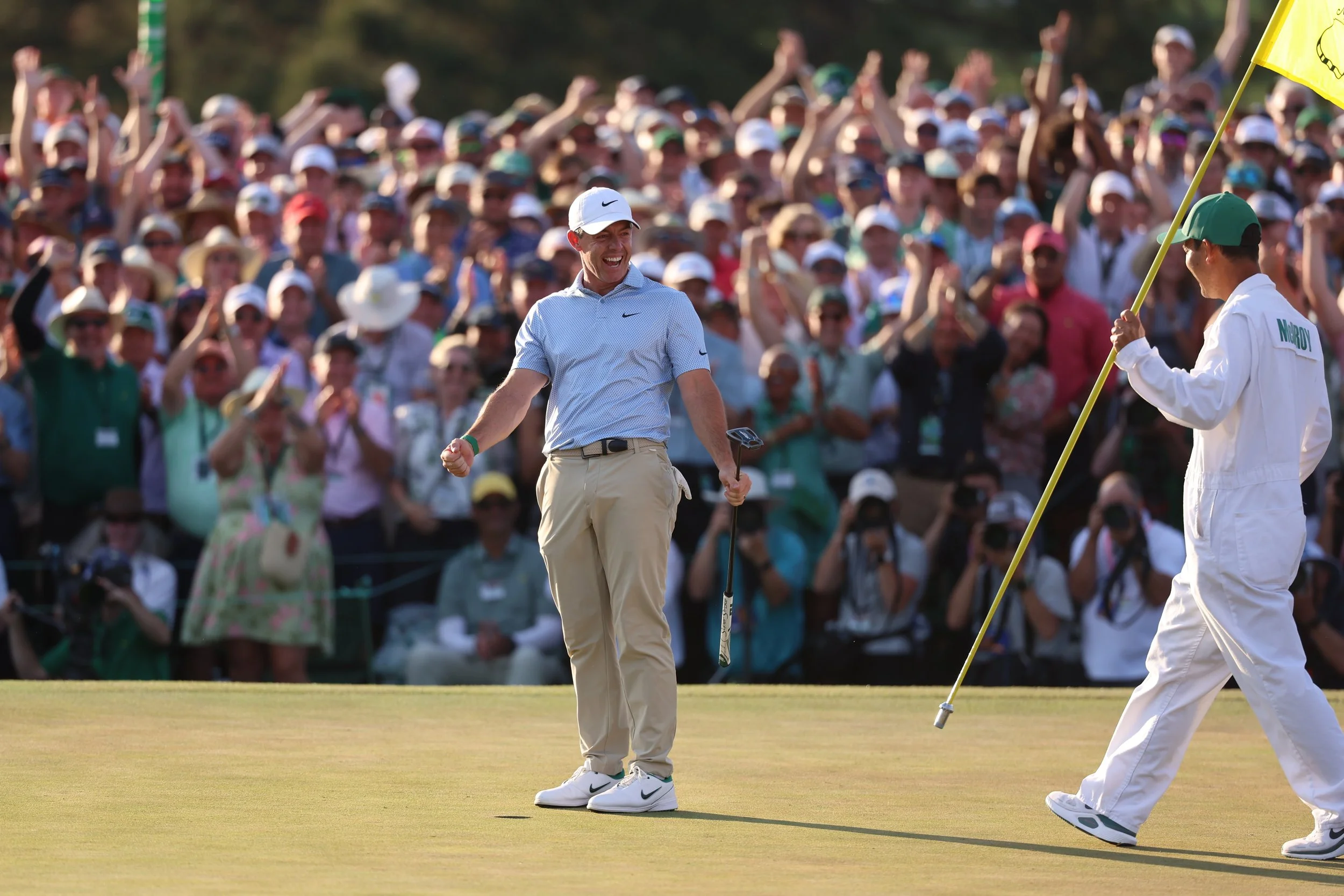
McIlroy goes back to back despite imperfect play
By Rodrigo Burgos Avila | Editor in chief
At Augusta National Golf Club, where history lives in every fairway and every green, Rory McIlroy delivered a performance that somehow felt both dominant and—but not all that clean.
And it still didn’t matter.
McIlroy walked away with his second straight Masters title on April 13, becoming just the fourth golfer ever to win back to back at Augusta. That list includes Tiger Woods, Jack Nicklaus and Nick Faldo. Not bad company.
But this one did not look like your typical championship run.
McIlroy struggled off the tee for most of the tournament. He was missing fairways, putting himself in tough spots, and forcing himself to play recovery golf more often than you would expect from a Masters champion.
At Augusta, that usually catches up to you.
This time, it didn’t.
Because every time things got messy, McIlroy found a way out of it.
His second round was the turning point. A 7-under-par 65 that didn’t just put him in control, it completely flipped the tournament. He made six birdies over his final seven holes, and just like that, the entire feel of the leaderboard changed. This included an incredible chip-in on 17 after his tee shot went left into the pines. From there he played a low iron to the right of the green before his wedge trickled into the hole.
Then came Saturday, and things got interesting again.
The lead slipped. The round got shaky. For a moment, it looked like the tournament might be getting away from him. But instead of folding, McIlroy, ranked second in the world, responded. A couple of clutch birdies late kept him right where he needed to be heading into Sunday.
And that set up a final round that felt like it could go a few different ways.
It was not perfect golf. Not even close.
But it was winning golf.
One of the biggest moments came out of the bunker, when McIlroy holed out in a shot that brought the crowd to life and gave him momentum right when he needed it. It was the kind of moment Augusta is known for. Unexpected, electric, and impossible to ignore.
And honestly, that’s what makes this version of McIlroy so dangerous.
He doesn’t need everything clicking anymore.
He just needs a chance.
Behind him, the pressure never really went away.
Cameron Young made sure of that. Young was aggressive all weekend, especially during a third round 65 where he racked up eight birdies and climbed right into contention. He kept making birdies, kept applying pressure, and even grabbed the lead early on Sunday.
For a while, it felt like it might actually be his moment.
But Augusta has a way of testing how long you can hold on, and Young just couldn’t quite match McIlroy down the stretch. Still, his performance said a lot. He is not far off from breaking through on a stage like this.
Scottie Scheffler made his move a little differently.
After a quiet start, Scheffler caught fire over the weekend. A 65 on Saturday followed by a clean, bogey free round on Sunday put him right in the mix late. No mistakes, steady birdies, and suddenly he was right there.
It almost turned into a full comeback.
Almost.
He finished just short, but his final two rounds were about as solid as it gets at Augusta.
And then there’s Patrick Reed, who once again reminded everyone how comfortable he is on this course.
Reed, who helped Augusta State University to consecutive NCAA Division I team titles in 2010 and 2011, was right there early. Calm, controlled, making the shots he needed to make. At one point, he even worked himself into a share of the lead, and it felt familiar. Like another classic Masters run might be loading.
But Sunday did not go his way.
Nothing completely unraveled at once. It was more subtle than that. A missed chance here, a tough hole there, and slowly the leaderboard started to move past him. By the back nine, he was no longer in control of his own path.
Still, the takeaway is the same as it always is with Reed, the 2018 champion. When the Masters comes around, he shows up.
And in the end, everything circled back to McIlroy.
This was not a dominant, flawless performance. It was something a little more telling. He won while struggling in one of the most important parts of the game. He missed fairways. He had to scramble. He had to respond over and over again.
And every time the tournament tightened, he answered.
That says a lot about where his game is right now.
Because if this is what it looks like when he is not at his best, that is a problem for everyone else.
Augusta does not just reward talent. It rewards patience, creativity, and the ability to recover when things go wrong.
This week, McIlroy had all of that.
Back-to-back Masters champion.
And maybe even more dangerous now than before.
Contact Rodrigo Burgos Avila at rburgosavila@augusta.edu.
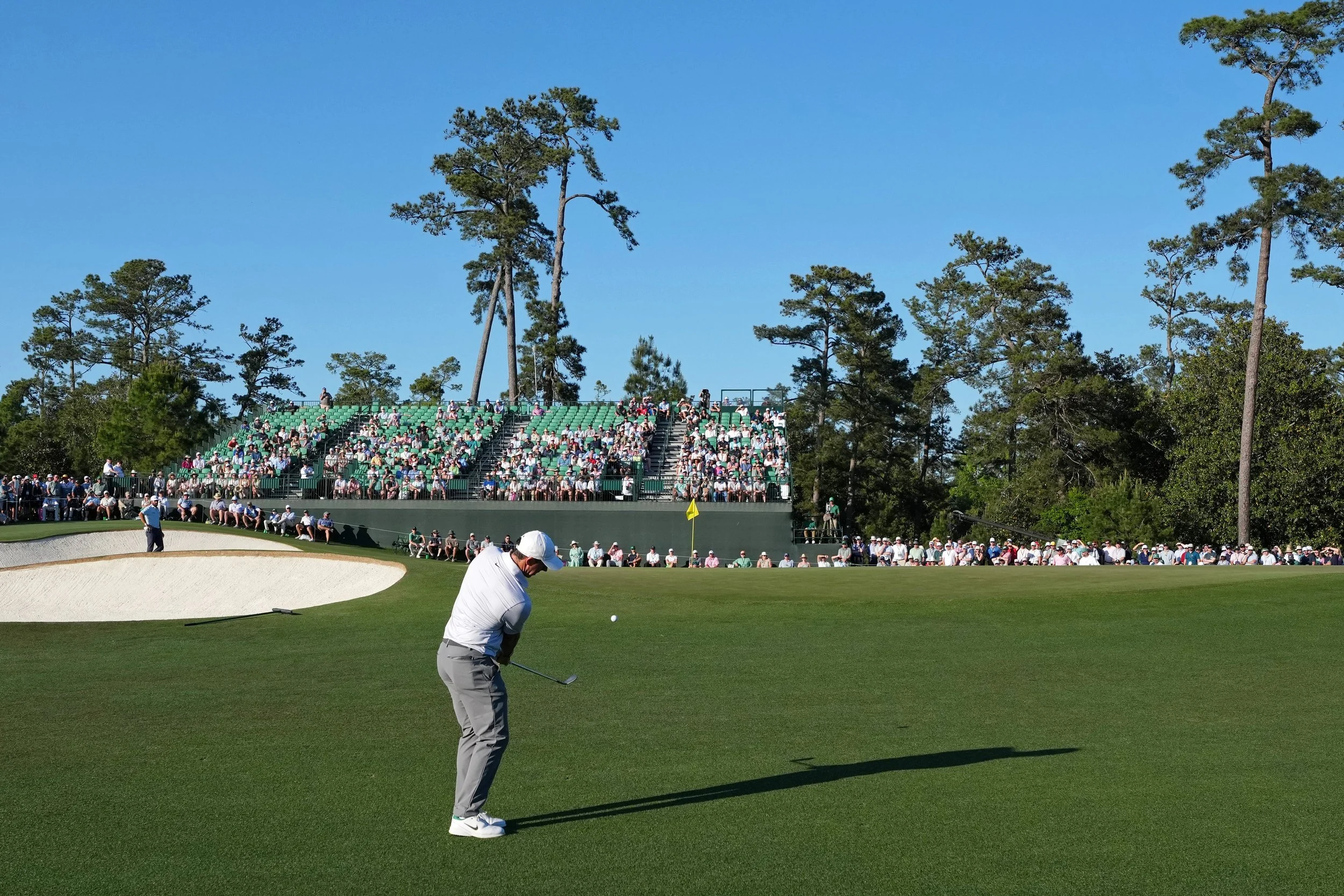
Rory McIlroy pitches in from the side of the 17th green for birdie during the Masters. This occurred on Friday, April 11, when McIlroy built a six-shot lead going into the third round. (photo by Michael Madrid-Imagn Images) At the top of the page, McIlroy celebrates with caddy Harry Diamond after tapping in on No. 18 to win his second straight Masters. (photo by Bill Streicher-Imagn Images)