The shutdown you didn't see and its ripple effect
By Caelyn Dockal | Staff writer
They say the federal government shutdown only affected the federal workforce, contractors, national parks, maybe even the economy.
But show me a server at a restaurant in Augusta who heard more about it and saw it in action.
I work at a restaurant in Augusta, and while the federal government shut down operations, I noticed something: the dining room was quieter. The rush hour was less rushed. The tips that once padded my paycheck were now thinner. Here’s why it mattered to both me and to our community.
Augusta isn’t just another city in the South. Yes, it has its downtown charm and riverwalk views, but behind the scenes, we’re also a place tied to federal employment and military presence. Fort Gordon, the U.S. Department of Veterans Affairs clinics and thousands of civilian federal workers all play a role in our local economy.
Because of the shutdown:
Federal and military workers faced uncertainty or delayed pay.
Consumer spending dipped, people held back because they were unsure or had less cash flow.
Small businesses and restaurants were feeling the pinch. One story written during the shutdown said local businesses were joining food pantry drives because times were tough.
From where I stood, this was what it looked like every shift:
A table that used to order appetizers, entrees and maybe a bottle of wine now skipped dessert. A group that used to linger now checked the clock and left early. A spouse of a military member mentioned they’re waiting on pay or unsure of overtime, so they weren't as carefree about ordering extra.
I heard it from my coworkers and from other restaurants nearby:
“It’s slower than usual.”
“Tips aren't what they used to be or what they were.”
And yeah, it hit me personally. My rent still needed to be paid. My car still needed gas. My future still depended on these shifts.
It’s easy to think: “Well, if you don’t like your job . . .”
But that’s beside the point. I do like my job, hospitality, meeting people and making their night. What I don’t like is when the government plays politics, the cost falls on individuals like me.
The “federal shutdown” becomes not just a headline but a reduced tip tray.
And what about the students?
We’re home to a number of college students whose parents, or who themselves, rely on federal aid, whose families are tied to the base. The ripple effects are real.
When dining and entertainment drop, it isn’t just me who feels it; it is everyone who works nights, weekend shifts or in hospitality relying on discretionary spending. It’s the local businesses seeing less and less traffic. It’s the decrease in spending entirely that is messing with the cash flow.
Sure, we write “military town” and “student town” separately, but here they are intertwined. A disruption in one sphere bleeds into another.
Here’s the kicker, the government shutdown didn’t just freeze some offices. It froze momentum. It froze the confidence of people going out. In Augusta, the shutdown is caused consumer confidence to fall, which in turn weakened local businesses and spending.
So here’s what I say, if you can swing it, go out. If you have the means, treat a friend. Order dessert, leave a little extra. Because when you do, you’re not just spending money, you’re keeping the lights on somewhere. You’re helping a server cover a shift and maybe sleep a little easier. Because until everything was sorted out in Washington, you and I were the ones feeling it in real time.
One last thing, let’s remember the human side of this. It’s not “federal employees” or “contractors.” It’s not their fault that this is happening. So, as easy as it was for me to get upset that people weren’t out as much or spending as much, I couldn’t be. These are lives, schedules, families.
The person sitting at the next booth might be waiting for an email telling them when their overdue paycheck will arrive. The kid at the next table might be counting on parents’ support that’s been delayed. This is the government’s fault. It’s not abstract.
While the shutdown, the longest in U.S. history, dragged on, I was here, with my apron on, continuing to give good service to my community.
I hope the same is reflected back to me. That is, a community that comes together and helps one another during the ever-changing times. Where things are uncertain but we know we can help each other out and stand together.
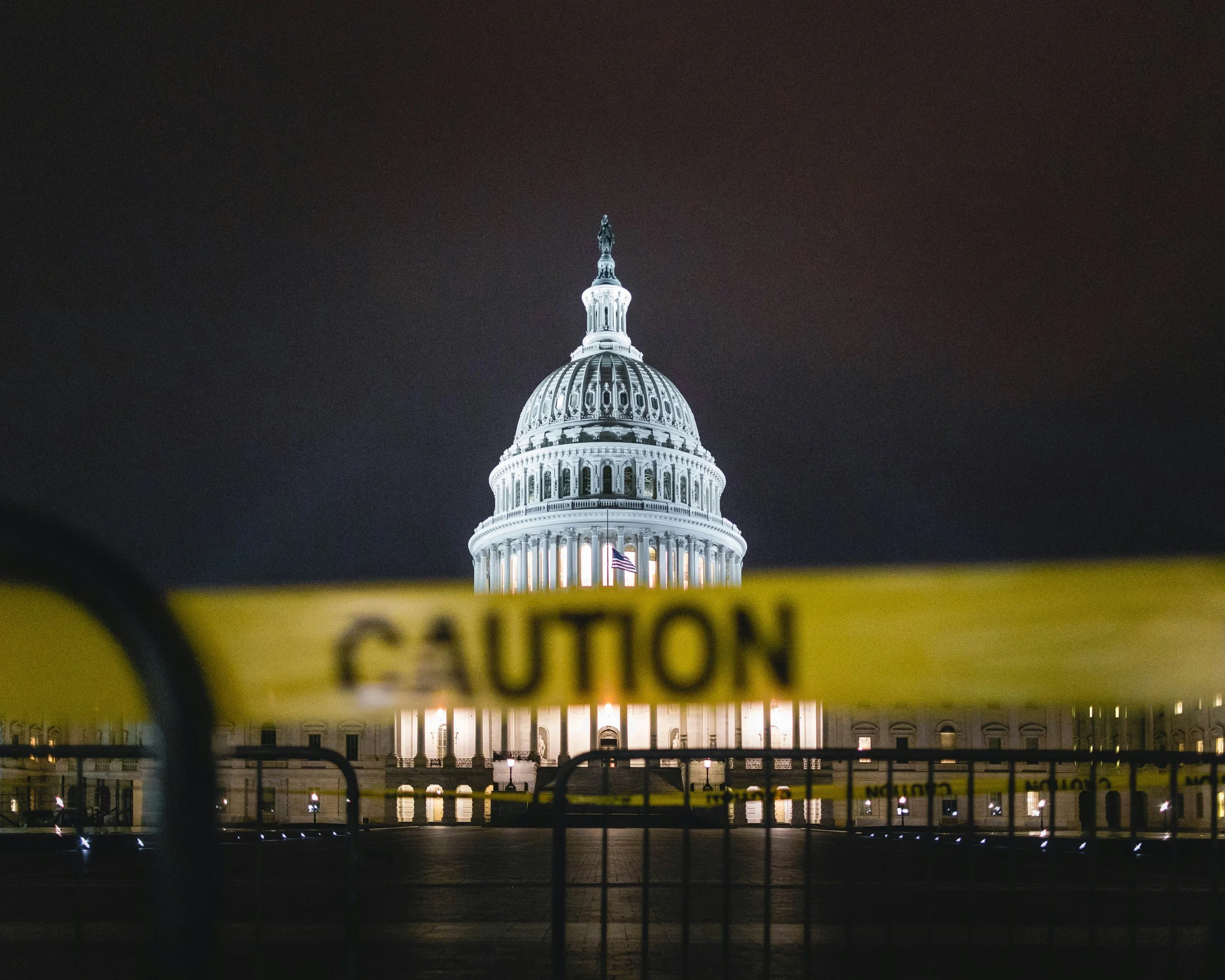
Note: Photo of the Capitol in Washington, D.C., by Andy Feliciotti for Unsplash.
Contact Caelyn Dockal at cadockal@augusta.edu.