Visibility shouldn't be limited by sport
By Davis Harley | Sports writer
We all know NCAA Division II athletics and the wide range of ways those sports are broadcast, from local streams to national audiences. Some sports are clearly favored and draw more viewers than others, but that reality does not mean the remaining programs should be pushed aside and left behind.
A broadcast team puts in a significant amount of work to deliver a quality production. From camera placement and audio setup to coordinating commentators, graphics and production crews, broadcasting is not a simple task. Still, many Division II institutions have the resources to go beyond covering only their most popular sports, such as basketball, baseball and volleyball. Many campuses already have the equipment, infrastructure and student interest needed to expand their broadcasts to include more sports.
Expanding coverage could also create valuable opportunities for students. Work-study positions are often limited, meaning many students interested in sports media never get the opportunity to gain hands-on broadcast experience. That problem is amplified when only select sports are prioritized while others, such as tennis and cross-country, are overlooked.
For students pursuing careers in broadcasting, journalism, photography or sports communication, these events could become real-world training opportunities. Students could learn how to operate cameras, conduct interviews, provide commentary, produce graphics and manage live productions. Schools would not only provide greater exposure for their athletes but also give students experience they can take into their future careers.
The lingering question always seems to be, “Is it even worth the effort to broadcast these events?” The answer should be a clear yes.
Many Division II athletes travel long distances to compete, and a significant number come from outside the United States. At Augusta University, both the men’s and women’s tennis teams feature athletes from countries such as France, Argentina and Mexico. These players represent more than just the university. They represent families and communities across the globe.
Augusta University thrives because of student-athletes who come from outside Georgia and the United States. One example is Angela Mateos, a volleyball player from Seville, Spain, who has been a dominant presence at the net for the Jaguars. It is difficult to imagine that her family would not want the opportunity to regularly watch her compete from home. Being able to see a loved one play online, rather than relying solely on written recaps or statistics afterward, creates a far more meaningful connection to the athlete’s experience.
Of course, volleyball is one of the sports lived-streamed by the Roar Network, which broadcast home matches, as well as men and women’s basketball, baseball and softball. Since those are broadcast on the internet, they are available around the world.
That connection matters. Parents and family members may spend years supporting an athlete’s career only to reach the college level and suddenly have fewer opportunities to watch them compete. For an international family separated by thousands of miles, a livestream may be the closest thing to sitting in the stands.
The ability for families, especially international families, to watch their children compete is reason enough to expand broadcasts. Schools already spend money promoting their athletic programs, and broadcasting more events should be considered part of that investment. Greater coverage can promote teams, showcase athletes, engage alumni and give prospective students another way to experience a university’s athletic culture.
Equal exposure does not mean every sport will receive the same number of viewers. A tennis match may never attract the audience of a basketball game, and a cross country meet may present more production challenges than a volleyball match. But audience size should not be the only factor determining whether athletes receive coverage. Smaller audiences still matter, particularly when those audiences include families, friends, alumni and potential recruits.
Some may also argue that language barriers make broader broadcasts impractical. While multilingual commentary would be ideal, it is not required. Affordable and accessible subtitle and translation tools continue to improve and could help bridge that gap, even when student broadcasters do not speak another language. Schools should view those challenges as problems to solve rather than reasons not to provide coverage.
Broadcast standards across Division II should be formally reevaluated to ensure athletes receive greater and more consistent exposure, regardless of sport. No parent should have to rely solely on a delayed article—likely written only in English—to find out how their son or daughter performed. These athletes put in the same hours, dedication and effort as those competing in more visible sports, and their moments deserve to be seen.
Expanding coverage does not have to happen overnight. Universities could begin by identifying sports that currently receive little or no live coverage and experimenting with smaller student-led productions. Even a basic livestream with a camera, scoreboard and clear audio would give families something they may not have had before. Over time, those broadcasts could improve as students gain experience and schools determine what works best.
Division II athletics should be about more than the programs capable of attracting the largest crowds. Every athlete wears the school’s name across their uniform and represents the university when they compete. Their sport should not determine whether their families get to watch those moments happen.
Broadcasting should not be about popularity alone. It should be about representation, opportunity and fairness—for the athletes who compete, the students who want experience, the families watching from hundreds or thousands of miles away and the campuses they proudly represent.
Visibility should not be limited by sport.
Contact Davis Harley at dharley@augusta.edu.
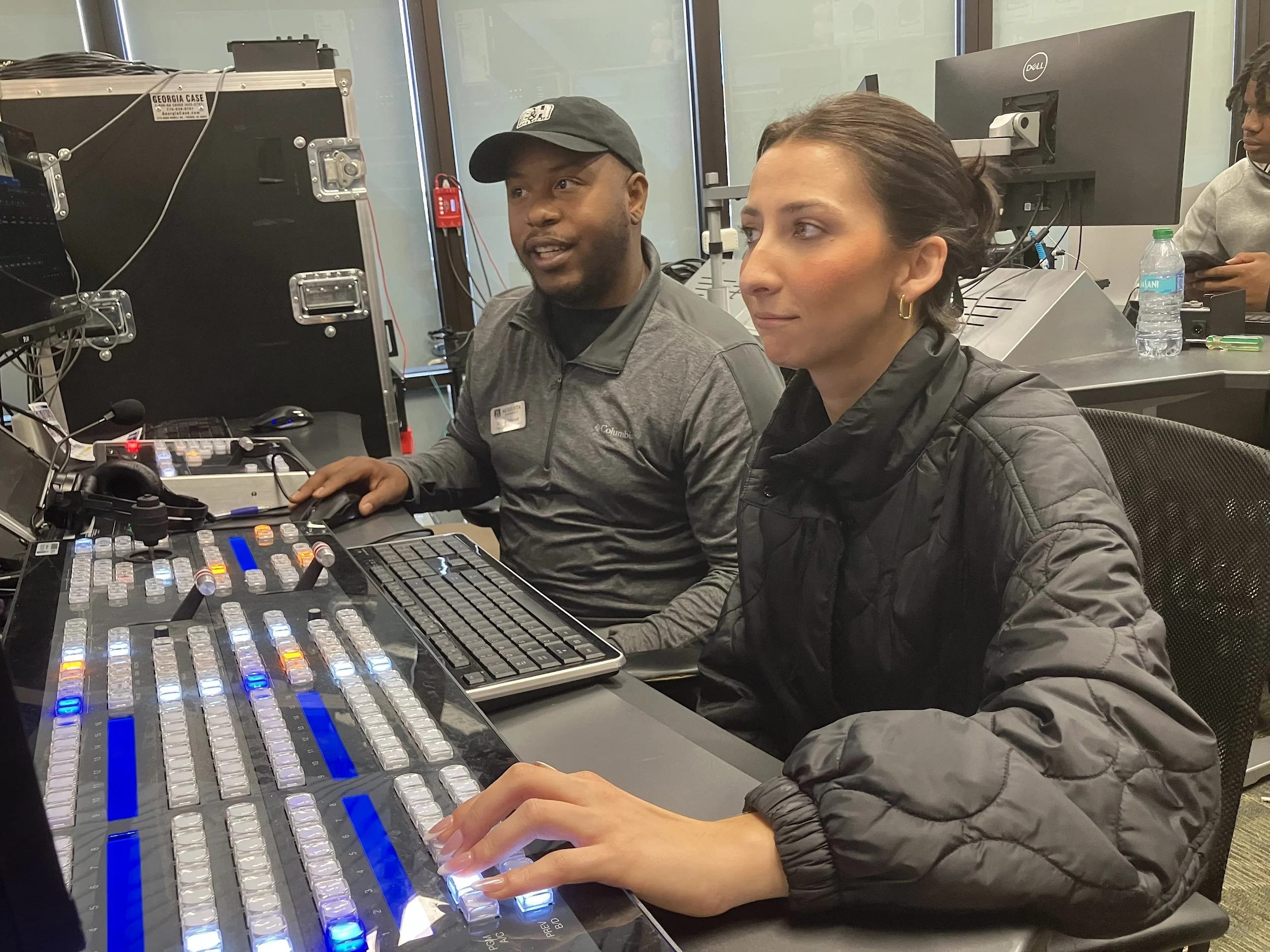
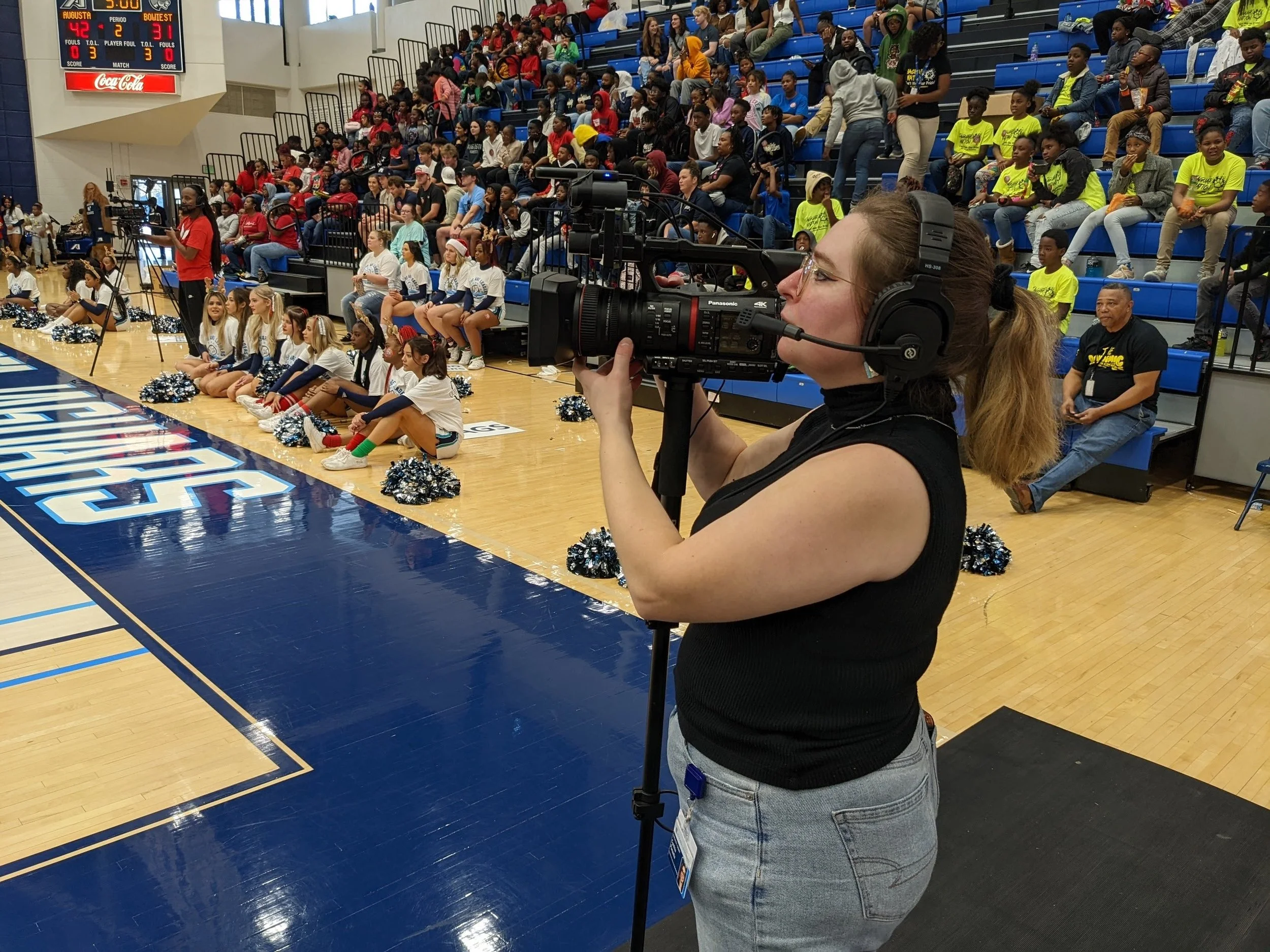
Communication student Nayla Reese (R) practices with Roar Network producer Thomas Mitchell on the Tri-Caster to select which camera feed is to go on the live-stream during an AU Athletics contest. At the top of the page, Cynthia Panzella of the Roar Network works a camera during a a basketball game at Christenberry Fieldhouse. (Bell Ringer file photos)