English professor receives AU RSCA grant for Arthurian literature book
By Aryle McCutcheon | Staff writer
Blaire Zeiders, an associate professor in Augusta University’s Department of English and World Languages, received a Research Scholarship and Creative Activity grant from AU to support her book examining Arthurian literature and its role in shaping religious and national identity.
Zeiders’ book, which she has titled “The Arthurian Catechism: Reading Literature as Liturgy in Early Modern England,” explores how people view stories about King Arthur.
“The way people read Arthurian texts is similar to how people read religious texts,” Zeiders said.
Zeiders’ writing about Arthurian stories began in graduate school at the University of Wisconsin but became more focused during a National Endowment for the Humanities summer seminar. The four-week seminar examined the Reformation and Counter-Reformation, a period of religious conflict and Catholic resistance in England.
“That experience really solidified the project,” Zeiders said.
The book argues that literature played a significant role in shaping identity, particularly national identity. According to Zeiders, reading Arthurian texts helped people understand what it meant to be English.
“If we take literature as seriously as religious texts, we can see how it becomes a formative element in identity,” Zeiders said.
The RSCA grant supports archival research, which involves studying rare historical materials. The funding allows Zeiders to travel to view original Arthurian manuscripts and provides summer salary support.
“Much of my research is archival,” Zeiders said. “This grant helps fund trips to see rare texts and gives me time to focus on the work.”
Although the book project existed before Zeiders received the grant, the funding is playing a key role in its completion. Applying for the grant required clearly explaining the project and its significance, as well as completing technical requirements.
“One of the biggest challenges was articulating exactly why this research needed funding,” Zeiders said.
Zeiders said the grant aligns with long-term academic goals and will help keep the book on track for completion in 2027.
“Having this funded means I don’t have to take a break from the project,” Zeiders said.
One of Zeiders favorite research discoveries involved readers drawings in early books. Zeiders found doodles and notes in the margins of Arthurian texts that resembled markings commonly found in Bibles and devotional materials.
“That was a really delightful discovery,” Zeiders said.
Despite receiving the grant, Zeiders said the writing process remains challenging. One concern is missing an important source that could strengthen the argument while another is making sure readers understand why the research matters.
“You always want the ‘so what’ to come through,” Zeiders said.
Zeider plans to pursue traditional publishing through academic presses. The grant has provided both financial support and confidence in the project.
“It’s a great sign that AU is investing in the humanities,” Zeiders said. “It feels like good momentum.”
Contact Aryle McCutcheon at AMCCUTCHEON@augusta.edu.
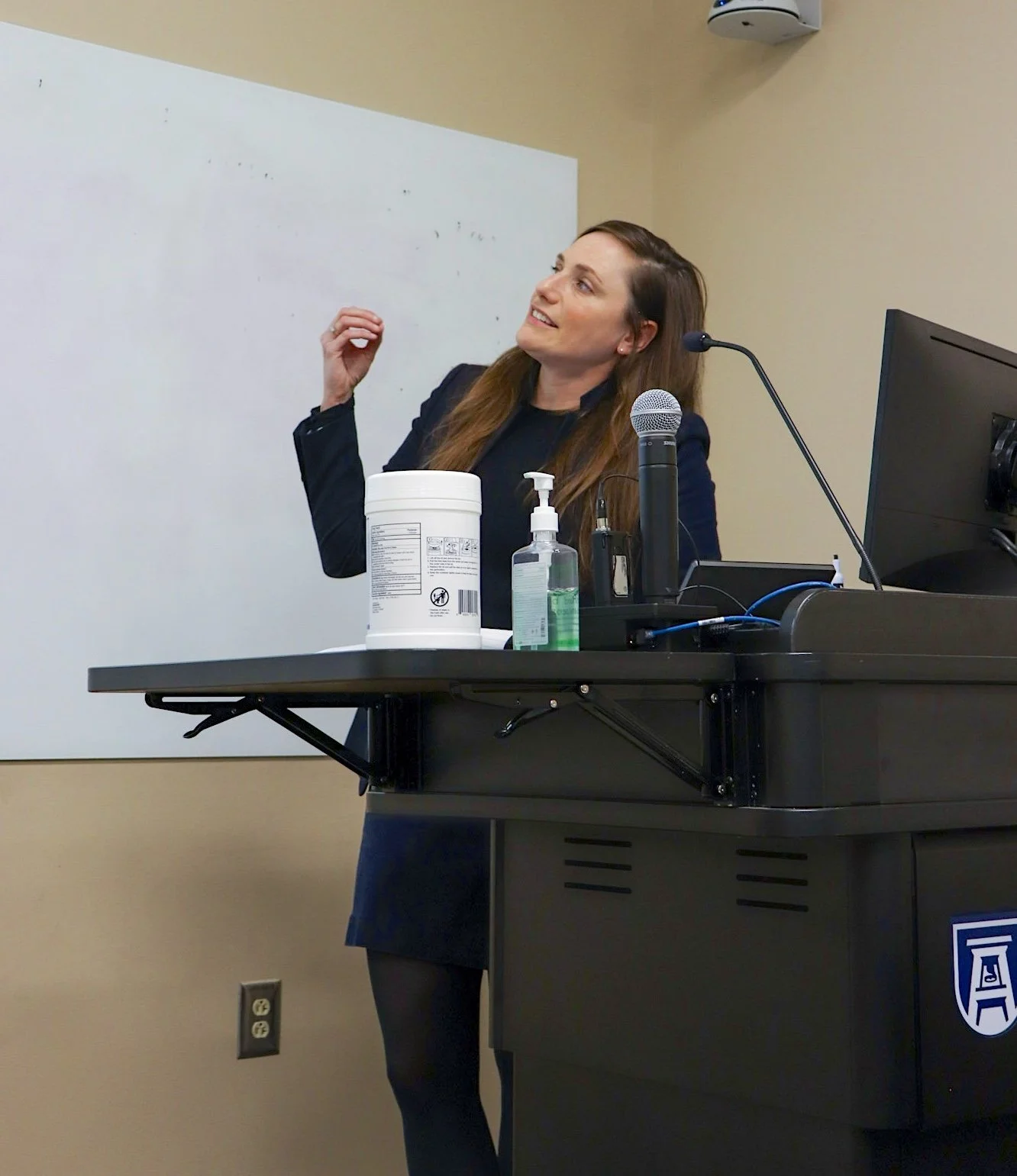
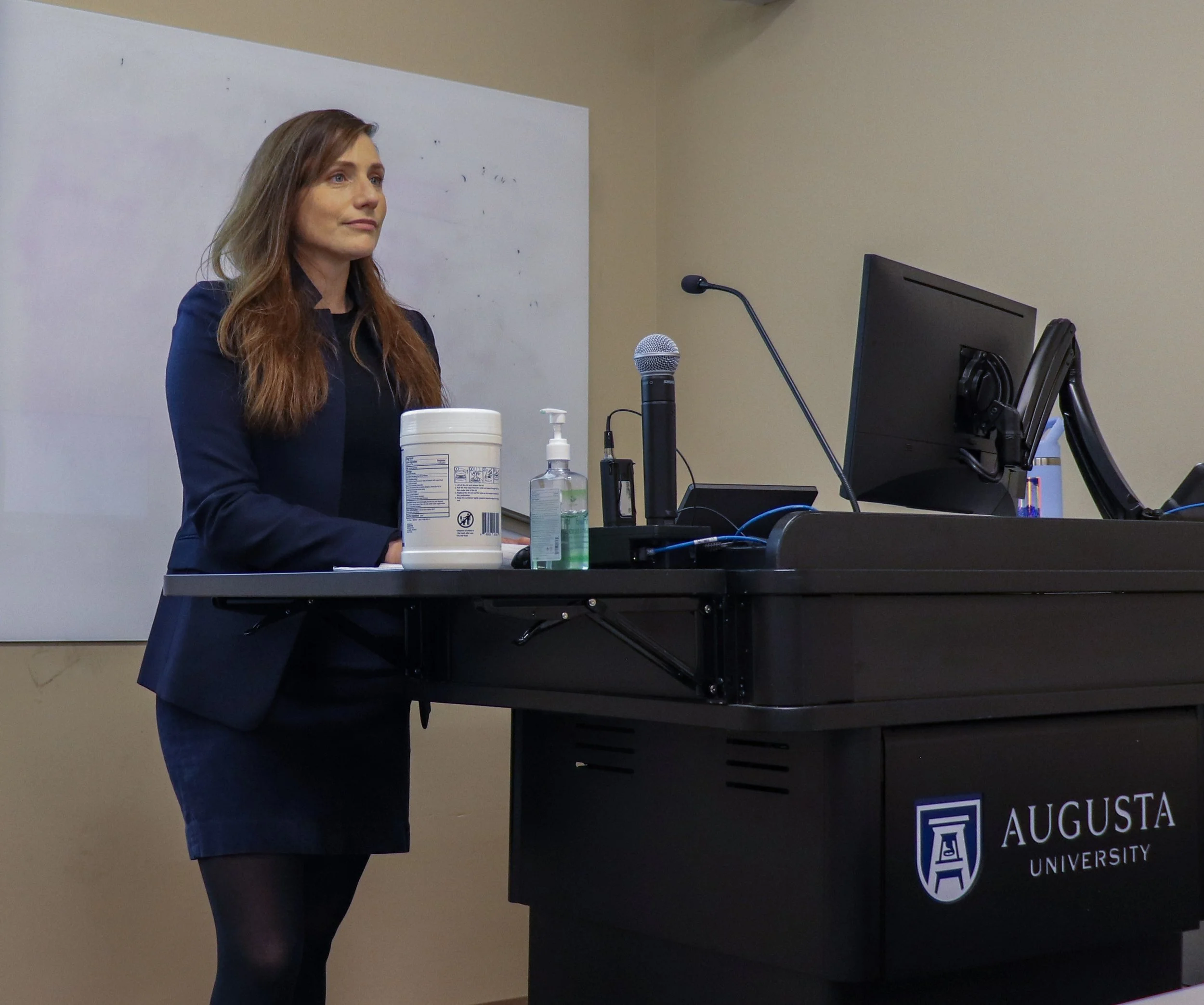
Associate professor of English Blaire Zeiders teaches a class in Allgood Hall on the Summerville Campus of Augusta University. At the top of the page, Zeiders is working on a book about the Arthurian legends and has won a major research grant from AU. (photos by Lara Shayeb/the Bell Ringer)