Bad Bunny's Super Bowl halftime show was a triumph for Puerto Rico and the world
By Rodrigo Burgos Avila | Editor in Chief
Benito Bad Bunny Martínez Ocasio stood on the world’s biggest stage on Feb. 8, at the Super Bowl halftime show, and delivered a performance that was nothing short of historic. He was not just an entertainer. He was a cultural representative. For Puerto Ricans everywhere, myself included, his presence, his choices and his message felt deeply personal. This performance was by a Puerto Rican, about Puerto Rican culture and for the entire Latin American community, all on a night watched by millions around the world.
From the moment he stepped onto the field, Bad Bunny invited viewers into a clear and intentional picture of home. The stadium was transformed into a living representation of Puerto Rico. Sugar cane fields, domino tables, food vendors, piragua stands, boxers like Xander Zayas and scenes of everyday life filled the screen. None of these details were random. Each one represented our history, our struggle, our joy and our resilience.
As a Puerto Rican, watching those images unfold was not just entertaining. It felt like seeing my island finally recognized and celebrated on the biggest platform possible. Moments like that are rare for us, which made this performance feel even more meaningful.
A celebration of Puerto Rico in its full reality
Bad Bunny did not water down Puerto Rican culture to make it easier for a mainstream audience to digest. He showed it honestly and proudly, including both its beauty and its struggles. The sugar cane fields referenced the island’s agricultural roots and the long history of labor and exploitation tied to them. Scenes of domino games and street vendors highlighted the importance of community and everyday traditions that many Puerto Ricans recognize as the heart of island life.
He also made sure to acknowledge the pain Puerto Rico has endured. During the performance of “El Apagón,” dancers climbed simulated power poles, a direct reference to the ongoing power outages that followed Hurricane María and continue to affect the island today. To some viewers, it may have seemed like just another visual. To Puerto Ricans, it was a reminder that our struggles are still very real and should not be ignored.
By including these elements, Bad Bunny expanded what a Super Bowl halftime show can be. It was not only about spectacle or hits. It became a story, one that allowed millions of people to see Puerto Rico through the eyes of someone who truly lives and represents it.
A message bigger than music
Very early in the performance, Bad Bunny made it clear that this halftime show carried a message bigger than hits or visuals. As the stadium screens flashed the words, “The only thing more powerful than hate is love,” the meaning of the night came into focus. This was not just a celebration of Puerto Rican culture. It was a reminder of humanity, unity, and empathy on one of the most watched stages in the world.
In a time where division, anger, and misunderstanding often dominate headlines, that message felt intentional and necessary. Bad Bunny used his platform to remind millions that love remains stronger than hate, louder than fear and more lasting than any moment of negativity. For Puerto Ricans especially, this message carried extra weight. Our history is filled with resilience in the face of hardship, and love has always been at the center of our communities, our families and our culture.
By placing that message at the heart of the performance, Bad Bunny framed everything that followed. The sugar cane fields, the piragua stand, the domino tables, the music and the guest appearances were not just cultural references. They were expressions of love for where he comes from and for the people who shaped him. The halftime show became a statement that representation rooted in love has the power to unite audiences far beyond language or background.
Ricky Martin’s presence and why it matters so much
The most powerful moment of the night came when Ricky Martin joined Bad Bunny on stage. This was far more than a guest appearance. It was a historic and emotional moment that connected generations of Puerto Rican music and identity.
Ricky Martin is one of the most important Puerto Rican artists of all time. Long before Latin music regularly dominated global charts, he broke barriers in spaces that rarely welcomed Spanish speaking artists. His success in the late 1990s and early 2000s helped open doors for Latino artists to perform on international stages without having to hide where they came from.
Seeing Ricky Martin stand next to Bad Bunny symbolized how far Puerto Rican music has come. It showed growth, progress, and continuity. Ricky represented the generation that first pushed through barriers, while Bad Bunny represents a new generation that no longer asks for permission to exist in global spaces.
This moment mattered deeply. It mattered to Puerto Ricans who grew up listening to Ricky Martin and to younger fans who see Bad Bunny as a symbol of pride and authenticity. It showed that Puerto Rican artists are not competing with one another. They are building on each other’s success.
That shared stage sent a clear message. Puerto Rican culture is not a trend. It is lasting, influential, and here to stay.
Breaking barriers without compromise
Another historic part of this halftime show was Bad Bunny’s decision to perform entirely in Spanish. This had never been done before at the Super Bowl. While some critics questioned the choice, for many of us it felt empowering.
For years, Latin artists have been expected to adjust themselves to fit American standards, often by switching to English or changing their sound. Bad Bunny refused to do that. He performed as himself, without apology. That choice alone made this performance groundbreaking.
This was not just a win for Spanish speakers. It was a win for anyone who has ever felt unseen or unheard. Representation matters, and moments like this expand the definition of what belongs on major stages.
What this moment meant to Puerto Ricans everywhere
I truly believe that every Puerto Rican watching felt proud during this performance, whether they enjoy Bad Bunny’s music or not. This was bigger than personal taste. It was about representation, respect, and visibility.
Puerto Rico has always produced talent, culture, and influence. Too often, that influence has been overlooked or filtered through someone else’s perspective. On this night, Bad Bunny presented Puerto Rico honestly, loudly, and confidently.
Having Ricky Martin there made it even more powerful. It connected our past with our present and reminded us that Puerto Rican excellence did not start with Bad Bunny and will not end with him.
A night that will be remembered
Bad Bunny’s Super Bowl halftime show was not just a performance. It was a cultural milestone. For Puerto Ricans, it was validation. For Latinos, it was representation. For the world, it was an invitation to understand a culture through its own voice.
From the sugar cane fields to the piragua stands, from everyday community life to generational unity, everything had purpose. This was a halftime show with heart, history, and meaning.
When artists stay true to who they are, the impact reaches far beyond music. On this night, Bad Bunny did exactly that, and Puerto Rico stood proudly at the center of the world.
Contact Rodrigo Burgos Avila at rburgosavila@augusta.edu.
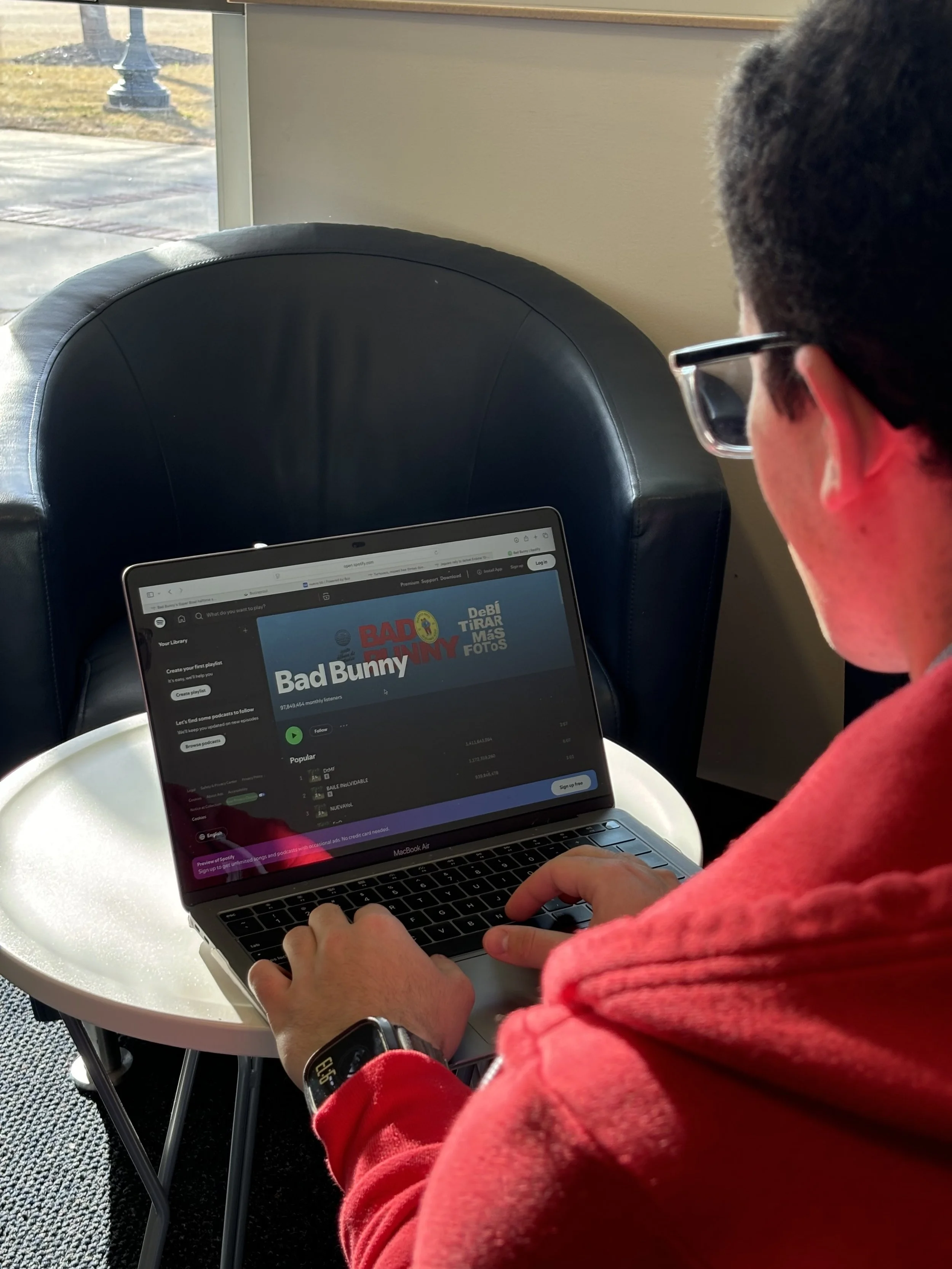
Note: At the top of the page, Bell Ringer Editor-in-chief Rodrigo Burgos Avila is seen working while listening to Bad Bunny, music that inspired him to write about his historic Super Bowl performance. (photo by Lydia Williams/the Bell Ringer)